AI Governance Built for Your Industry
One-size-fits-all governance fails. Your industry has unique regulators, stakeholders, and risks. Choose your sector to explore governance built for your context.
Here’s the reality: All AI governance starts with the same foundation—The Seba 12 Ps of Responsible AI. But how you apply it, and how you lead with it, depends entirely on your industry’s regulatory environment, institutional mission, and stakeholder expectations.
This isn’t about checking compliance boxes. It’s about building governance that gives your organization agency to lead innovation safely.
Learn the framework foundation → (links to /frameworks)
WHY THESE THREE INDUSTRIES?
Dr. Freddie Seba didn’t choose these three sectors randomly.
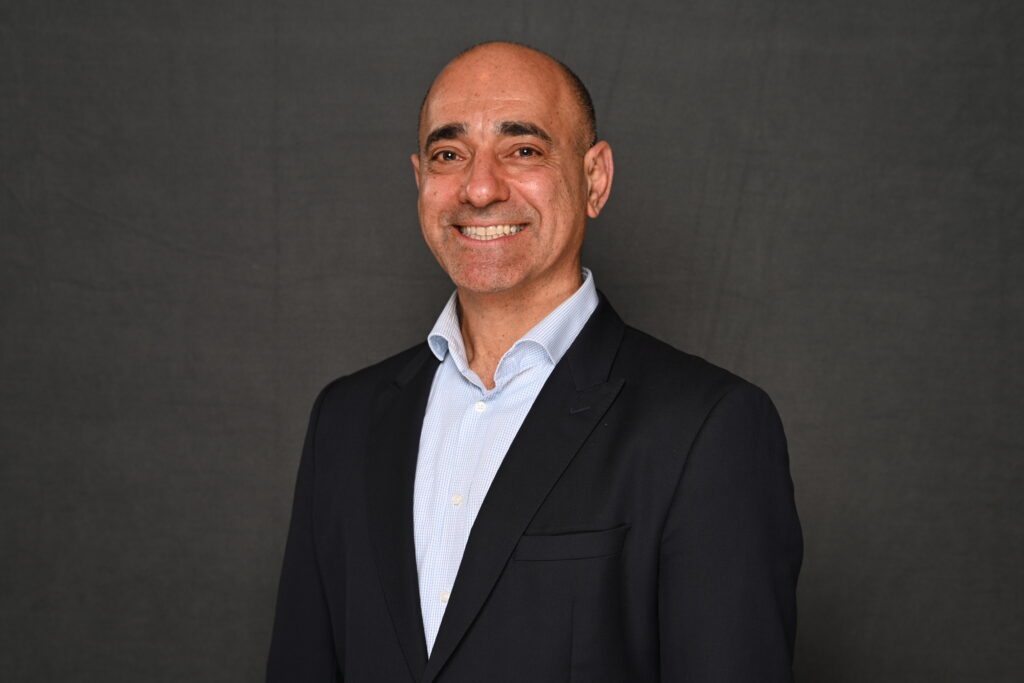
He brings 20+ years of practitioner experience across healthcare, fintech, and higher education—combined with doctoral-level research (EdD, University of San Francisco; MBA, Yale; MA, Stanford, International Policy Studies). These three industries are where he’s built governance systems from the ground up, conducted institutional research, and led faculty initiatives.
He serves as faculty leadership in digital health informatics education and holds a leadership role in the American Medical Informatics Association (AMIA) Global Health Informatics Working Group. His frameworks don’t come from theory. They come from institutional practice—from real organizations solving real governance problems.
The frameworks you’ll explore here are grounded in his decade of experience in healthcare education, operational deployment across financial services, and deep engagement with university leadership on academic integrity and mission-aligned AI governance.
In other words: These frameworks come from someone who’s been in the room when boards make AI decisions, when regulators ask tough questions, and when organizations face governance crises.
HOW THE SEBA FRAMEWORKS HELP YOUR ORGANIZATION
The Seba 12 Ps of Responsible AI and Seba’s AI Minimum Viable Governance address a critical leadership gap that most organizations face.
The Problem
AI enters your organization silently.
It comes through departmental workflows, individual employees testing new tools, shadow AI systems that nobody formally approved. By the time your leadership realizes what’s happening, it’s often too late. The first major failure looks like an operational misstep or an invisible data leak. Governance becomes reactive firefighting, not proactive leadership.
You’re managing crises instead of leading strategy.
The Solution
The Seba frameworks translate governance from aspiration into operational infrastructure. They give your leaders concrete agency.
They’re grounded in doctoral research, institutional practice, and real-world deployment challenges. They’re not aspirational policy sitting on a shelf. They’re actionable governance that your teams can implement this quarter.
Dynamic, Not Static
Here’s what sets these frameworks apart: Your industry’s regulatory landscape is live and shifting.
What mattered last year is being enforced now. What’s being proposed now will be required next year. The Seba frameworks are designed to evolve with your industry’s policy changes and technology developments. Your governance doesn’t become obsolete when regulations shift. It adapts.
This means quarterly monitoring, not annual reviews. This means your frameworks stay relevant because the world is changing, and you’re tracking it.
WHAT’S HAPPENING IN YOUR INDUSTRY RIGHT NOW
Regulators aren’t waiting for perfect AI. They’re enforcing governance requirements today.
Your industry is moving. Your governance framework must move with it.
HEALTHCARE: Active Enforcement, Immediate Requirements
FDA is actively regulating AI in diagnostic imaging. CMS is monitoring AI use in patient safety and billing. State medical boards are tightening oversight of clinical decision support.
What it means: Healthcare organizations need validation protocols and clinician engagement before deployment. Governance isn’t optional. It’s the foundation of patient safety strategy.
What’s changing: Your governance framework must evolve as FDA guidance shifts, CMS requirements tighten, and state board oversight expands—sometimes monthly.
FINTECH: Enforcement Actions Are Real
The Federal Reserve is issuing enforcement actions on lending AI models that discriminate. The CFPB is investigating algorithmic bias in fintech. The OCC updated Model Risk Management requirements.
What it means: Financial services firms need bias testing, documentation, and audit trails. Speed without governance equals regulatory exposure. Period.
What’s changing: Your governance framework must track Federal Reserve enforcement trends, emerging CFPB guidance, and policy shifts to stay ahead of risk.
HIGHER EDUCATION: Accreditors Are Now Asking Questions
SACSCOC, WASC, and other accreditors are now asking universities about AI governance. Generative AI policies are evolving rapidly. Faculty engagement is becoming a governance requirement, not an option.
What it means: Universities need public AI governance policies aligned with institutional mission. Your accreditation visit is where governance gets tested. Period.
What’s changing: Your governance framework must evolve as accreditor expectations shift, generative AI use cases expand, and faculty needs change.
See the full 2026 AI Governance & Policy Update → (links to /ai-governance-updates-2026)
CHOOSE YOUR INDUSTRY
HEALTHCARE AI GOVERNANCE
The Leadership Challenge
Healthcare organizations deploy AI for diagnostic imaging, patient safety prediction, and clinical decision support.
The stakes are highest here. A governance failure isn’t a missed forecast—it’s a patient safety incident. But silence on AI isn’t safe either. You can’t ignore the technology and pretend it’s not already in your system.
The real question: How do you enable your clinical teams to lead AI adoption safely?
Your Leadership Priorities
Patient safety comes first. Clinical integrity comes second. Regulatory readiness comes third.
But at the core, you need to answer: How do you give clinicians agency to lead innovation safely, and give your board confidence in clinical AI decisions?
Key Regulators: FDA, CMS, State medical boards
Specific Use Cases You’re Managing:
- Diagnostic imaging AI governance
- Patient safety prediction systems
- Clinical decision support systems
- AI-assisted pathology and radiology
Critical Governance Areas:
- Clinical validation before deployment
- Clinician engagement and decision-making authority
- Incident preparedness and safety drills
- Patient safety protocols and oversight
- Liability, risk management, and board accountability
How The Seba Frameworks Help
The Seba 12 Ps of Responsible AI gives your clinical leaders a governance language that regulators understand and clinicians trust.
It starts with Purpose: Does this AI improve patient outcomes? It emphasizes People: Does this AI protect clinician judgment and patient dignity? It builds in Preparedness: Are you ready if something goes wrong?
Seba’s AI Minimum Viable Governance translates this into five critical questions your organization can answer this quarter:
- Which clinical AI systems are we deploying?
- Who decides if they’re safe to deploy? (And that someone is a clinician, not just IT)
- How do we know they work fairly and safely in production?
- What happens if something goes wrong?
- How do we stay accountable to patients, regulators, and our board?
These aren’t theoretical exercises. They’re operational. They’re designed for health systems that need governance now, not perfect governance someday.
What You Need to Implement
Governance that clinicians trust and regulators understand. Validation protocols before deployment (not after failure). Board-level awareness of clinical AI risks. Clear decision rights on which AI systems get deployed to patient care. Governance that evolves as FDA guidance changes and new clinical use cases emerge.
Services & Investment
AI Governance Briefing for C-Suite & Board
One-hour briefing tailored to your organization’s clinical AI portfolio and regulatory landscape.
Investment: 3,000–5,000
Health System AI Readiness Assessment
Evaluate your current governance maturity, identify gaps, and map a deployment roadmap using the Seba framework.
Investment: 8,000–15,000
Board Briefing: AI Liability & Patient Safety
Help your board understand clinical AI risks, regulatory requirements, and governance accountability.
Investment: 3,000–8,000
Healthcare-Specific Keynote: Ungoverned Clinical AI
Educate your clinical, IT, and governance teams on The Seba 12 Ps and why they matter for patient safety.
Investment: 5,000–15,000
Embedded Advisory
Ongoing governance support (quarterly or monthly) to build your governance infrastructure, monitor regulatory changes, and update policies as guidance evolves.
Investment: 15,000–40,000+/month
Total Investment Range: 3,000–40,000+ depending on service
Explore Healthcare AI Governance Framework → (links to /healthcare-ai-governance)
FINTECH AI GOVERNANCE
The Leadership Challenge
Financial services firms face a bind that’s unique to your industry: deploy AI at speed, but satisfy regulators with zero tolerance for model failures.
Regulators—Fed, OCC, SEC, FinCEN—now require documented governance. A lending model that discriminates isn’t a business mistake. It’s a regulatory violation, lawsuit, and massive fines.
The real question: How do you enable rapid innovation while building governance that actually prevents regulatory harm?
Your Leadership Priorities
Fair lending enforcement now. Model risk documentation always. Bias testing is non-negotiable.
But at the core, you need to answer: How do you lead your organization to deploy AI faster while building confidence that your models won’t trigger enforcement actions?
Key Regulators: Federal Reserve, OCC, CFPB, SEC, FinCEN
Specific Use Cases You’re Managing:
- Lending bias testing and fairness validation
- Underwriting and credit decision AI
- Payment system AI
- Fraud detection models
- Customer segmentation and targeting AI
Critical Governance Areas:
- Algorithmic bias testing and validation
- Model risk management documentation
- Fair lending and payment fairness protocols
- Regulatory compliance audit trails
- Discrimination prevention and monitoring
- Speed without cutting corners
How The Seba Frameworks Help
The Seba 12 Ps of Responsible AI reframes fintech governance as a leadership and risk-management advantage, not a bureaucratic slowdown.
It emphasizes Profits: How do you create value without externalizing harm to customers? It emphasizes People: Does your AI discriminate? It emphasizes Policy: Are you aligned with evolving regulatory requirements?
Seba’s AI Minimum Viable Governance gives you a practical way to answer:
- Which AI models are we deploying?
- Who decides if they’re safe to deploy? (And that someone understands model risk, not just market opportunity)
- How do we know they work fairly in production? (Bias testing, fairness metrics, real-world monitoring)
- What happens if something goes wrong?
- How do we stay accountable to regulators and customers?
The frameworks enable speed because they clarify what actually matters. You’re not checking every box. You’re focusing governance on the decisions that move the needle.
What You Need to Implement
Governance that enables rapid innovation while staying ahead of regulatory change. Bias testing built into deployment gates. Audit trails for every lending or payment decision. Board-level confidence that your AI models won’t trigger enforcement actions. Governance that evolves as Federal Reserve guidance changes, CFPB enforcement priorities shift, and new model risk concerns emerge.
Services & Investment
Regulatory AI Governance Briefing
One-hour briefing on current Federal Reserve, OCC, and CFPB requirements. Understanding what regulators are enforcing now and what they’re watching for next.
Investment: 5,000–8,000
AI Model Risk Management (MRM) Assessment
Evaluate your current model governance maturity, compare to Federal Reserve and OCC standards, and identify implementation gaps.
Investment: 10,000–20,000
Fintech AI Governance Workshop
Educate your model risk, compliance, and executive teams on The Seba 12 Ps and how to operationalize them across your AI portfolio.
Investment: 8,000–25,000
Lending & Payment Systems AI Governance
Specific governance framework for lending and payment AI, including fair lending validation, bias testing, and compliance audit trails.
Investment: 8,000–15,000
Total Investment Range: 5,000–25,000 depending on service
Explore Fintech AI Governance Framework → (links to /fintech-ai-governance)
HIGHER EDUCATION AI GOVERNANCE
The Leadership Challenge
Universities deploy AI for admissions, student success prediction, and academic advising. Generative AI forces every institution to rewrite academic integrity policies.
The question isn’t whether to use AI. It’s how to lead innovation while protecting what makes universities valuable: academic integrity, faculty judgment, and institutional trust.
The real question: How do you lead your institution to embrace innovation while protecting the values your institution was founded on?
Your Leadership Priorities
Institutional mission alignment. Faculty engagement and voice. Academic integrity policies for the generative AI era.
But at the core, you need to answer: How do you lead your institution to embrace innovation while protecting academic integrity and institutional values?
Key Stakeholders: SACSCOC, WASC accreditors; Faculty leaders; Student affairs; Institutional leadership
Specific Use Cases You’re Managing:
- Generative AI policies for student work and academic integrity
- Admissions AI and equitable access
- Student success prediction systems
- AI-assisted academic advising
- Institutional effectiveness and learning analytics
Critical Governance Areas:
- Academic integrity policies for generative AI
- Faculty governance participation and trust
- Equitable AI in admissions and student success prediction
- Mission-aligned AI deployment
- Transparency and institutional accountability
- Accreditor expectations and compliance
How The Seba Frameworks Help
The Seba 12 Ps of Responsible AI roots governance in your institution’s mission and values, not in fear of technology.
It starts with Purpose: Does this AI serve your institutional mission? It emphasizes People: Does this AI enhance faculty judgment or replace it? Does it serve students equitably? It builds in Process: Are you transparent about how and why you use AI?
Seba’s AI Minimum Viable Governance translates this into questions your faculty and leadership can answer together:
- Which AI systems are we deploying? (And why?)
- Who decides if they’re safe to deploy? (Faculty voices must be in this decision)
- How do we know they work fairly in production? (Equitable access, student outcomes, no hidden bias)
- What happens if something goes wrong?
- How do we stay accountable to students, faculty, accreditors, and our community?
Governance becomes a conversation about institutional values, not a compliance checklist.
What You Need to Implement
Governance that feels like stewardship of academic values, not compliance burden. Faculty voices in AI decision-making. Public AI governance policies that accreditors understand and respect. Clear academic integrity guidance for students and faculty in the generative AI era. Governance that evolves as generative AI use cases expand, accreditor expectations shift, and your institution’s understanding of responsible AI deepens.
Services & Investment
Presidential/Provost AI Governance Briefing
One-hour briefing on what accreditors are asking, what peer institutions are doing, and how to lead your institution’s AI governance strategy.
Investment: 5,000–8,000
Faculty AI Governance Workshop
Engage your faculty in governance. How to think about academic integrity in the generative AI era. How to create policies faculty will actually implement and students will understand.
Investment: 8,000–15,000
Board AI Governance Briefing
Help your board understand institutional AI risks, accreditor expectations, and governance accountability. Build board-level confidence in your AI leadership.
Investment: 3,000–6,000
Higher Education AI Keynote
Educate your institutional community on The Seba 12 Ps and how they apply to academic integrity, innovation, and mission-aligned AI governance.
Investment: 5,000–15,000
Total Investment Range: 3,000–15,000 depending on service
Explore Higher Education AI Governance Framework → (links to /higher-education-ai-governance)
NOT SURE WHICH APPLIES TO YOU?
Still deciding which industry describes your organization? That’s okay. Many institutions span multiple industries or don’t fit neatly into one category.
Questions about AI governance frameworks? Read our AI Governance FAQs →* (links to /faqs)
Not ready to commit yet? Start with a 15-minute consultation to map your governance priorities, challenges, and leadership goals. No pressure. Just clarity.
Schedule a 15-Minute Consultation → (links to consultation booking)
FREQUENTLY ASKED QUESTIONS
Q: My organization spans multiple industries. Which framework applies?
A: Start with your primary business line and primary regulatory environment. However, if you operate across industries, Dr. Seba can help you build a governance structure that addresses multiple regulatory contexts while staying coherent. Schedule a consultation to discuss your specific situation.
Q: This sounds like a lot of work. How quickly can we implement governance?
A: Most organizations can establish Seba’s AI Minimum Viable Governance within 6–12 weeks. Full implementation across all AI systems is ongoing. The goal isn’t perfection. It’s to move from governance theater to operational governance this quarter, then deepen implementation as your AI footprint grows.
Q: Can we implement this internally, or do we need external consulting?
A: Many organizations successfully implement governance internally, especially with Dr. Seba’s book (Ungoverned) and newsletter resources. However, external advisors accelerate adoption, ensure alignment with regulatory requirements, and provide board credibility. It depends on your internal capacity, risk tolerance, and timeline.
Q: What if our regulators have different requirements than what you describe?
A: The Seba 12 Ps framework is informed by current regulatory requirements across healthcare, fintech, and higher education. But every organization has unique constraints. Dr. Seba’s approach includes quarterly policy monitoring and custom implementation based on your specific regulatory environment.
Q: Can you help us if we’re just starting with AI?
A: Yes. In fact, starting with governance before you scale AI deployment is ideal. The earlier you build governance into your AI culture, the easier implementation becomes. Governance becomes a leadership practice, not a reactive firefighting exercise.
Q: What’s the difference between a briefing and embedded advisory?
A: A briefing is a one-time educational event (1–2 hours) for your leadership team on The Seba 12 Ps and your industry’s regulatory landscape. Embedded advisory is ongoing support (quarterly or monthly) to build your governance infrastructure, monitor policy changes, update your frameworks as regulations evolve, and ensure your governance stays operational. Choose based on your maturity and bandwidth.
Q: Are these frameworks compliant with regulatory requirements?
A: The Seba frameworks are grounded in current regulatory requirements, but regulations evolve. Dr. Seba tracks policy changes in healthcare (FDA, CMS), fintech (Federal Reserve, OCC, CFPB), and higher education (accreditors) through his weekly newsletter. Your governance framework stays current because you’re monitoring the landscape too.
Q: How is this different from other AI governance frameworks?
A: The Seba approach combines doctoral rigor with practitioner urgency. It’s not theoretical. It’s grounded in 20+ years of institutional deployment, faculty leadership in healthcare informatics, and ongoing engagement with boards and regulators. It focuses on leadership, not compliance. And it’s designed to evolve—your governance doesn’t become obsolete when policy or technology changes.
More questions? Read the full AI Governance FAQ →* (links to /faqs)
READY TO BUILD GOVERNANCE FOR YOUR ORGANIZATION?
Dr. Seba works with healthcare organizations, financial services firms, and universities to build governance that fits your industry’s unique constraints and opportunities.
Governance that your leaders can actually implement. Governance that enables innovation safely.
Choose your industry above to explore a framework built for you.
Schedule a 15-Minute Consultation → (links to consultation booking)
Get a Quote & Book Dr. Seba → (links to quote/booking page)
ADDITIONAL RESOURCES
Explore the Framework Foundation
Learn the Seba 12 Ps of Responsible AI Framework Foundation → https://freddieseba.com/frameworks
Stay Current on Policy & Enforcement
Read the Full 2026 AI Governance & Policy Update → https://freddieseba.com/ai-governance-updates-2026
Get Weekly Governance Insights
Subscribe to The Seba 12 Ps Newsletter (Track evolving policy and technology in your industry) → https://freddieseba.com/newsletter
See Dr. Seba in Action
Watch Dr. Seba’s Speaking Videos and Keynotes → https://freddieseba.com/videos
Learn from Dr. Seba’s Research
Explore the Thought Leadership Hub → https://freddieseba.com/thought-leadership
Understand Dr. Seba’s Background
Learn About Dr. Freddie Seba (Full Bio, Credentials, AMIA Leadership) → https://freddieseba.com/about
Get the Full Playbook
Read Ungoverned: A Practical Guide to Seba’s AI Minimum Viable Governance → https://freddieseba.com/book-ungoverned
Deep Dives on Governance
Listen to AI Governance Conversations Podcast → https://freddieseba.com/podcast