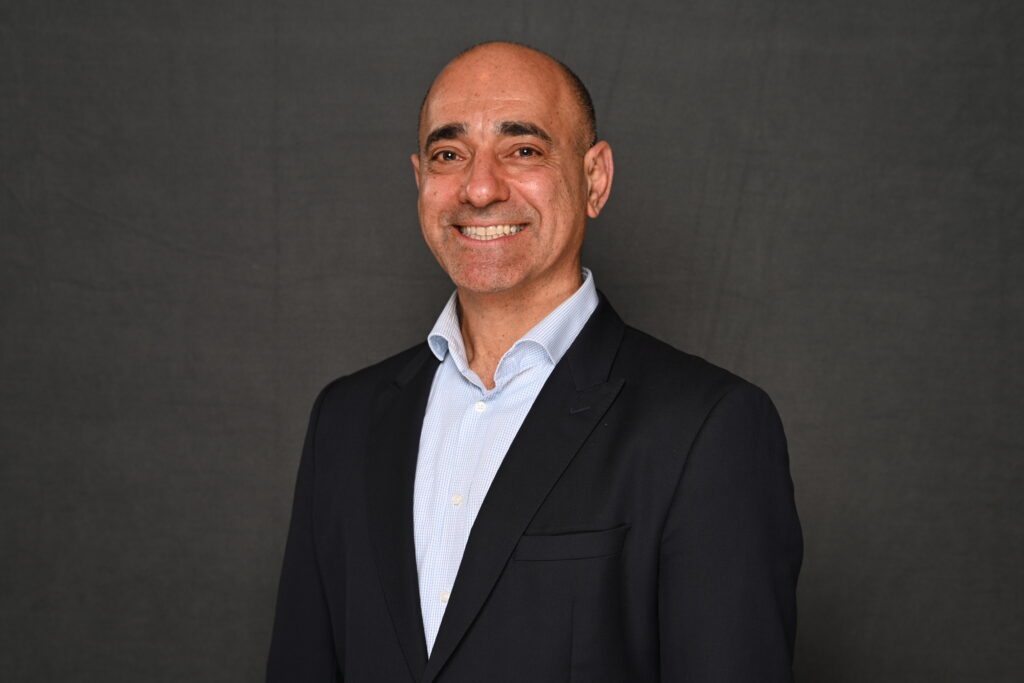
By Freddie Seba © 2025 Freddie Seba. All rights reserved.
Framing the Conversation
AI adoption is accelerating, but not evenly, and certainly not always wisely. Recent reports from Gallup and McKinsey reveal that the difference between stalled experiments and strategic advantage isn’t about having the best models. It’s about trust, culture, ethics, governance, and leadership readiness.
Meanwhile, Geoffrey Hinton, often referred to as the godfather of AI, continues to warn that these systems are developing agency faster than we can create meaningful and intentional oversight, ethics, and governance frameworks.
This week’s core message: AI success today goes beyond technical. It’s socio-technical, encompassing cultural, ethical, and organizational aspects. And it’s why strong, adaptive, intentional ethics and governance frameworks are more urgent than ever.
Signs of the Times in the Data
Gallup Workplace Insights
- Just 25% of U.S. workers say they use AI on the job.
- However, that number jumps to 43% when leadership actively communicates its AI strategy concerning career growth.
- Whenever leadership fails to communicate its strategy effectively, GenAI Adoption lags.
Reflection: Teams are not pushing back on GenAI; they’re waiting for direction and ethical clarity.
Source: Gallup – AI in the Workplace
McKinsey on “Agentic AI”
McKinsey, a large and reputable business consulting firm, highlights how “agentic AI” extends beyond automation into systems that autonomously initiate decisions and workflows. Organizations achieving real returns on investment (ROI) are not just piloting solutions; they are rethinking, redesigning, and rebuilding their workflows with an intentional approach to human-centered machine collaboration.
Reflection: Success is not about technical capacity and speed; it is about leadership courage to rethink roles, risks, and responsibilities.
Source: McKinsey – Seizing the Agentic AI Advantage
Geoffrey Hinton’s Escalating Concerns
Hinton’s latest interviews emphasize that we may have already crossed the threshold of control, as systems are “understanding and manipulating the world in ways we don’t fully grasp.” Without rapid advances in ethics and governance, these trajectories could deepen inequality or destabilize critical complex systems.
Source: The Independent – Hinton’s AI Warning
Tech Jobs: A Telling Gap in Leadership Readiness
Ravio’s 2025 Tech Jobs Report reveals a striking paradox:
- GenAI is fueling page demand for new roles in every sector.
- Yet only 37% of chief information officers (CIOs) say they are fully AI-literate.
- Few fully understand their ethical, governance, culture, or strategic risks.
A brief plug for this Newslwtrer: the Seba GenAI Ethics & Governance Framework is centered on executive literacy, goal and mission alignment, accountability, and human-centeredness. Without proper AI literacy, intentionality, and authentic leadership, no amount of technical hiring or AI models will build a sustainable, trust-centered AI competency for your institution.
Source: Ravio – Tech Jobs Report 2025
Sector Implications: Ethics and Governance-Driven Adoption
Higher Education
GenAI tools for grading, tutoring, and instructional design are outpacing campus policy. Leadership’s GenAI prohibition, mitigation risk only, or reactive tactic will fall behind a well-thought-out, intentional adoption strategy and transparent governance, which will prepare future-ready students while preserving faculty agency and dignity.
Healthcare
Ambient scribes and AI-driven diagnostics enhancers promise efficiency. Still, they risk undermining patient trust and clinicians’ accountability without robust oversight. Ethics and Governance frameworks must be embedded in workflows long before a patient or institutional harm forces it.
Financial Services
Agentic AI underwriting models can streamline risk assessment; however, without clear ethical and governance guidelines and audit trails, they expose institutions to unexpected regulatory and reputational risks. Ethics and governance cannot be reactive; they must be proactive.
The Seba Framework: A Leadership Compass
The Seba GenAI Ethics & Governance Framework directly addresses the challenges highlighted by Gallup, McKinsey, Hinton, and Ravio:
- Communication Alignment: Patients, faculty, students, employees, and customers should understand how GenAI aligns with your institution’s goals, banding, and mission.
- Teams AI Literacy: Closing leadership skill gaps is non-negotiable.
- Lifecycle Governance: Ethical guardrails can’t be an afterthought from pilot to retirement.
- Human Oversight & Role Clarity: AI should never operate in a vacuum of accountability.
- Transparency & Explainability: Building trust requires more than performance and comprehension.
This isn’t just ethics as compliance. It’s governance as infrastructure for lasting, responsible innovation.
What to Do Next
For leaders:
- Communicate your Generative AI strategy and demonstrate how it aligns with the team’s career growth and institutional mission.
- Prioritize literacy at the top—don’t let tools outpace leadership understanding.
- Establish governance protocols before your first major deployment, not after.
For Teams and Practitioners:
- Deploy with intentionality: document outcomes, gaps, and any ethical dilemmas that arise.
- Ask leaders where the guardrails are—and how they define success.
- Invest in personal fluency around GenAI’s impacts, not just its interfaces.
Final Reflection
Generative AI will not wait for slower adopters to catch up. The difference between thriving and coping will come down to authentic leadership that communicates early, governs rigorously, and invests in the ethical literacy that trust requires.
Organizations that fail to define how GenAI aligns with human dignity, equity, and purpose will find those answers written for them by the market, regulators, or the next crisis.
With Gratitude
Deep thanks to the communities shaping this work through collaboration and critical dialogue:
@University of San Francisco, @USF School of Nursing and Health Professions, @USF School of Education, @AMIA – American Medical Informatics Association, @AAC&U – Association of American Colleges & Universities, @Stanford Human-Centered AI, @CHAI – Coalition for Health AI
About the Author
Freddie Seba is an author, speaker, and Ed.D. doctoral candidate at the University of San Francisco, researching the ethics and governance of Generative AI for institutional leaders. As an academic practitioner, former digital health program director, corporate executive, and entrepreneur, he partners with universities, healthcare systems, and financial organizations to advance innovation grounded in trust and human values. www.youtube.com/@FreddieSeba
This newsletter is also available at Linkedin, freddieseba.com and YouTube/@freddieseba, and Substack.
Copyright & Use Statement
© 2025 Freddie Seba. All rights reserved.
This content is provided for educational, strategic, and professional insight. Please do not reproduce or republish without permission. For licensing, reprints, or collaborations, contact us via LinkedIn or freddieseba.com.
This newsletter was drafted and refined with generative AI tools for synthesis and clarity. All insights, conclusions, and voices reflect the author’s original perspective.
@generativeAI #AIethics #AIGovernance #LeadershipInAI #ResponsibleAI #DigitalTransformation #FutureOfLeadership #AIpolicy #AIstrategy #HumanCenteredAI #SebaFramework #AIinEducation #AIinHealthcare #AIinFinance #StrategicClarity #AIreadiness #GovernanceMatters #CHAI #StanfordHAI #AMIA2025 #AACU#FreddieSeba