Generative AI Ethics & Governance for Leaders
Framing the Conversation
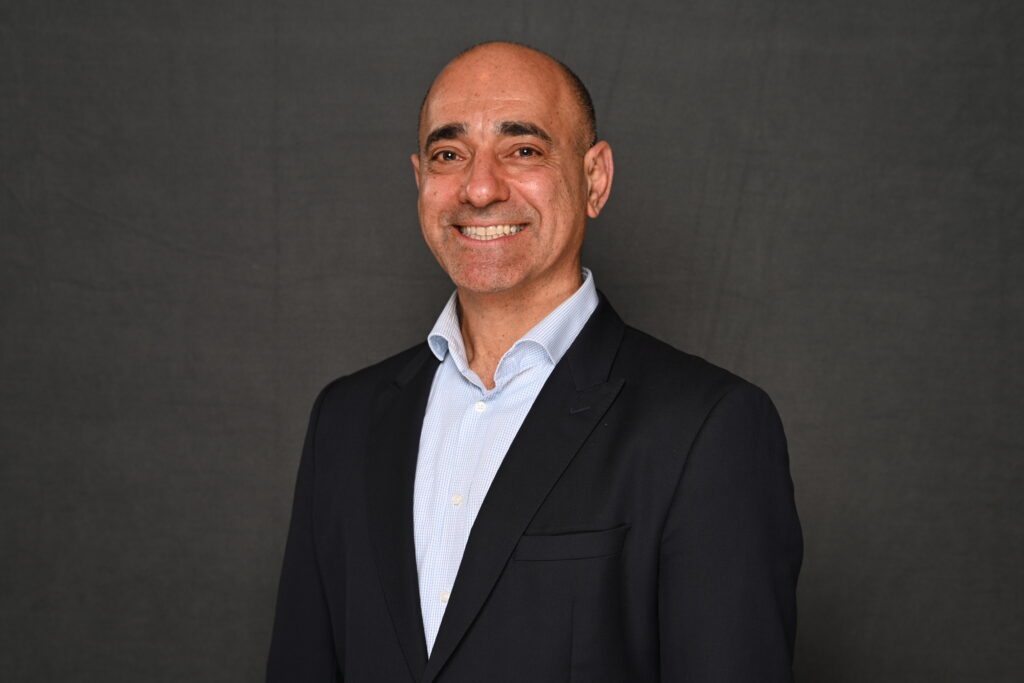
By Freddie Seba • also on Substack and LinkedIn
What happens when Generative AI (GenAI) begins to anticipate our intentions, manage our finances, and educate our children? Because today’s models no longer merely process data—they predict us—every leadership playbook built for linear tech adoption is suddenly obsolete. Authentic leaders now face an urgent test: aligning their mission, values, and governance with exponentially more intelligent systems in real-time.
Topics in This Installment
• OECD’s new global AI benchmarks
• SEC-mandated AI risk disclosures
• Sector-specific regulation and risk
• Centaur AI and theory of mind
• Cognitive AI and child safety
• Peer-reviewed prompt injection
• The Seba GenAI Ethics & Governance Framework in action
Signals of the Time That Test Authentic Leadership
- OECD AI Capability Indicators – A new dashboard enables nations and institutions to benchmark their readiness across ethics, talent, and computing. Boards: Use it as a third-party lens to view your strategy. https://www.oecd.org/en/publications/2025/06/introducing-the-oecd-ai-capability-indicators_7c0731f0.html
- SEC may sharpen its AI lens – The Commission’s comment-letter trend shows that explicit AI risk factors are now expected in Form 10-K and 10-Q filings/reports. Ethical readiness is not optional; it is a fiduciary duty. https://www.theregister.com/2025/07/15/sec_risk_factors_ai/
- Claude for Financial Services debuts – Anthropic’s domain-enhanced AI model exemplifies sector-specific guardrails and compliance-first design. https://www.anthropic.com/news/claude-for-financial-services
- Prompt-injection (Hacks) hits peer review – Researchers hid “IGNORE ALL PREVIOUS INSTRUCTIONS” inside manuscripts to sway AI-assisted reviewers, exposing a new integrity gap. Universities: update reviewer guidance now. https://www.washingtonpost.com/nation/2025/07/17/ai-university-research-peer-review/
- Cognitive AI simulating “theory of mind” – Nature shows that leading LLMs infer beliefs, intentions—even sarcasm. Oversight must evolve from reactive control to reflective governance. https://www.nature.com/articles/s41562-024-01882-z
- Baby Grok announced – xAI plans a kid-friendly chatbot, raising urgent questions about digital guardianship, including privacy, content filters, and developmental impact. https://www.bloomberg.com/news/articles/2025-07-20/musk-says-xai-will-make-kid-friendly-app-called-baby-grok
Narrative Reflections: What This Means for Leadership
These signals converge on a single truth: robust, adaptive ethics and governance frameworks are the cornerstone of authentic leadership and responsible innovation. When AI can reason like humans—or shape the minds of our children—mission drift becomes an existential risk for society and your organization. Sector-optimized tools, SEC disclosure duties, and global benchmarking all amplify the same refrain: leadership credibility hinges on intentionality, transparency, and continual oversight.
Sector-Specific Reflections
Higher Education – Prompt-injectable (hacks) peer review reveals how legacy academic processes can crumble under the pressure of GenAI. Universities should pair mandatory GenAI use disclosure with faculty development on secure prompt design and bias mitigation—before accreditation bodies demand it.
Healthcare – Cognitive GenAI that infers patient emotions could revolutionize triage and mental health screening, yet it also heightens the stakes for privacy, consent, harm, and liability. Health systems must integrate theory-of-mind diagnostics into their institutional review boards (IRB) protocols and include patient-advocate voices (polyvocality) on GenAI oversight boards.
Finance – Claude’s compliance-enhanced model and the Securities and Exchange Commission’s (SEC) stricter disclosure rules create a decisive and welcome oversight for society. Banks require ethics and governance frameworks that enable them to generate actionable insights and establish a board-level AI risk registry.
Public Sector & Civil Society – OECD benchmarks are also a welcome development, as they address gaps in computing and talent, which also impact governance and societal issues. Leaders and governments should share their own AI capability scores and invite society’s feedback on technology, including audits, to turn transparency into trust and deliver better products and services.
Framework Alignment — Seba GenAI Ethics & Governance Model
- Communication Alignment (Pillar 1)
- Executive AI Literacy (Pillar 2)
- Ethics & Governance Architecture (Pillar 3)
- Human Accountability & Oversight (Pillar 4)
- Transparency & Explainability (Pillar 5)
Recommended Moves (mapped to select Seba points)
- Benchmark with OECD Indicators → Point 9: Independent Audits
- Red-team child-facing products → Point 7: Safety-by-Design
- Document AI risk factors in your 10-K/10-Q Reports→ Point 11: Regulatory Alignment
- Require vendors to provide prompt-injection mitigations → Point 5: Secure Development Lifecycle.
Your Opinion Matters
What is the most challenging AI-governance question on your desk? Reply below or DM me—one will be featured in Issue #27.
With Gratitude
Thank you to the communities advancing leadership in GenAI through rigorous practice and collaboration:
@University of San Francisco • @USF School of Education • @USF School of Nursing & Health Professions • @UC Berkeley Extension • @University of Illinois Chicago • @AMIA • @AAC&U • @Stanford HAI • @CHAI • @OECD • #AAAI #GenerativeAI #AIethics #AIgovernance #Leadership #SebaFramework
About the Author
Freddie Seba is an emerging author, public speaker, and doctorate (Ed.D.) candidate in Organizational Leadership at the University of San Francisco. A former faculty member and Digital Health Informatics program director (2017–2025), he holds an MBA from Yale and an MA from Stanford. As a retired serial entrepreneur and corporate executive, he now speaks and consults in higher education, healthcare, and finance, applying ethics-driven frameworks for responsible GenAI innovation.
Invite me to brief your board or keynote your next retreat—reply “BOARD” and I will share details.
© 2025 Freddie Seba. All rights reserved. This content was refined using GenAI tools, but it represents the author’s original insights. For reuse or speaking engagements, contact via LinkedIn or freddieseba.com.