AI Ethics & Governance for Leaders, Boards & Trustees:
Why 2026 Forces Boards to Protect Judgment and Critical Thinking
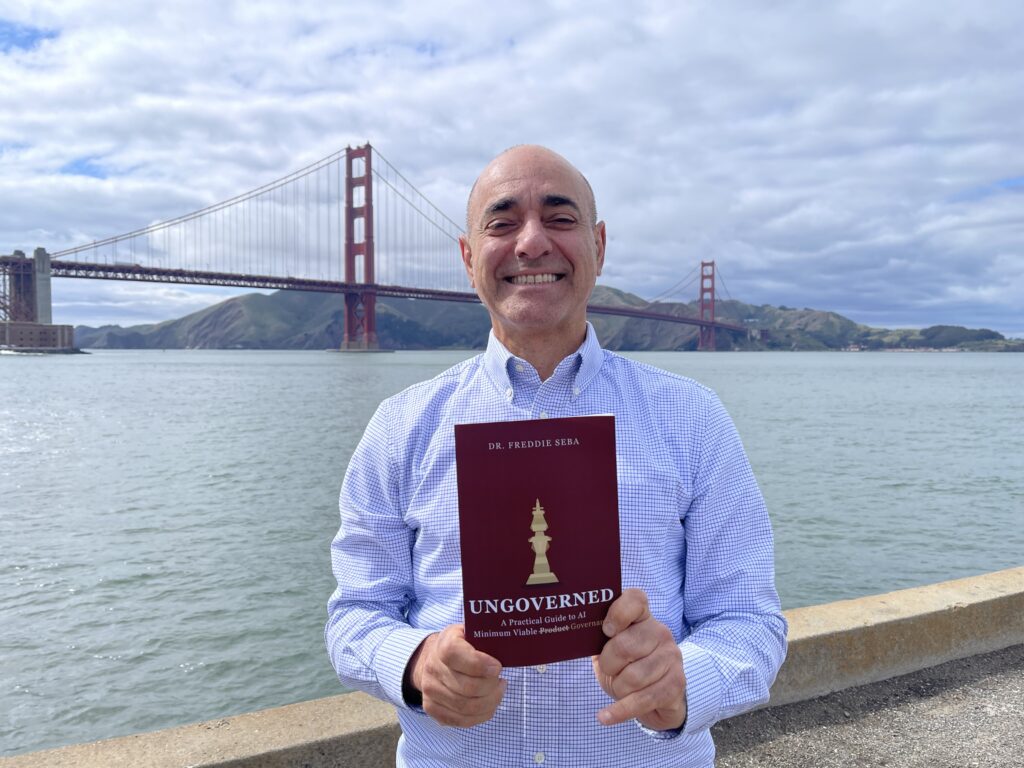
By Freddie Seba
© 2026 Freddie Seba. All rights reserved.
Executive Signal
This week’s signals converge on a deeper governance shift:
AI is no longer only shaping what institutions do. It is increasingly shaping how institutions reason, deliberate, diagnose, and justify decisions.
Across education, healthcare, research, and public policy, AI systems are mediating judgment, structuring inquiry, accelerating conclusions, and influencing what counts as legitimate knowledge. The governance challenge has moved beyond outputs and bias into the protection of institutional judgment itself.
Boards and trustees are now being asked to steward:
- How reasoning is formed
- How dissent is preserved
- How speed interacts with deliberation
- How critical thinking survives automation
AI governance is no longer just technical oversight. It is judgment stewardship.
Geopolitical & Infrastructure Risk: Open Models, Power, and Optionality
On January 20, 2025, @DeepSeek—an obscure hedge-fund-turned-AI startup from Hangzhou—released a model approaching frontier performance at dramatically lower cost.
After intense competition in China’s domestic market, DeepSeek and similar firms are now looking abroad. The U.S. is increasingly constrained by geopolitics. The global south offers limited commercial upside. Europe is the likely destination.
European hesitation is understandable:
- Data sovereignty concerns
- Critical-infrastructure dependence
- Strategic rivalry
Several EU states briefly explored restricting DeepSeek’s chatbot over fears of data exfiltration. These concerns are legitimate. But governance is not the same as rejection.
Open models—whether from China, the U.S., or elsewhere—introduce:
- Local deployment
- Reduced vendor lock-in
- Strategic optionality in a fragmenting AI landscape
Board takeaway:
AI origin matters—but governance capacity matters more.
Epistemic Risk: When AI Enters the Knowledge Loop
Reporting from TechCrunch and scholarship on SSRN show AI systems solving advanced reasoning tasks once reserved for elite human expertise.
The deeper issue is legitimacy. When faculty, clinicians, researchers, and executives rely openly on AI, authority shifts:
- What counts as knowledge
- Who is accountable for the error
- How trust is established
Once institutions endorse AI-mediated reasoning, they inherit responsibility for epistemic harm, even when humans remain “in the loop.”
Board takeaway:
AI-assisted knowledge is still institutional knowledge—and carries institutional liability.
Education Risk: Efficiency vs. the Education of Judgment
Coverage from The New York Times Magazine The Seattle Times shows AI reshaping:
- Assessment design
- Classroom authority
- Student trust
- Faculty judgment
Efficiency gains are real—but so is the risk of hollowing out the education of the whole person. If AI becomes an answer engine, students learn shortcuts. If governed intentionally, AI can become a critical reflection engine—forcing explanation, critique, and reasoning.
Board takeaway:
- AI strategy in education is no longer about tools.
- It is about what kind of thinkers institutions are producing.
Clinical & Scientific Risk: Judgment Under Acceleration
This week’s healthcare and discovery signals were unusually explicit:
- Compounding IT and AI risk exposure Becker’s Healthcare Hospital Review
- Persistent transparency gaps Coalition for Health AI (CHAI)
- Safety concerns with zero-shot predictions Stanford Institute for Human-Centered Artificial Intelligence (HAI)
- Sustainability vs. clinical utility tensions Health Affairs Ltd.
- Disclosure limits and evolving model behavior Anthropic
- Misuse of AI chatbots now listed as a top health technology hazard @ECRI
- New peer-reviewed evidence on LLM risks in healthcare Springer Nature / @BMC Medical Informatics and Decision Making
- AI-enabled point-of-care ultrasound raises governance and validation questions Yale University
As noted by The New York Times
“AI doesn’t have to be perfect to be better. It just has to be better.” The danger is not imperfection. It is ungoverned acceleration.
Board takeaway:
Clinical AI governance must be continuous, transparent, and enforceable—not episodic.
Reports: Agentic AI Moves from Theory to Deployment
This week, @Singapore released its Model AI Governance Framework for Agentic AI, extending earlier generative AI guidance into systems that plan, act, and interact with reduced human input.
Key signals:
- Risk-based deployment as the default posture
- Explicit institutional accountability for AI-initiated actions
- Continuous monitoring, escalation, and incident learning
This reflects a global shift: governance is moving from content to agency.
Board takeaway:
If your institution deploys AI agents, governance must answer who owns AI-initiated actions, how drift is detected, and how harm is contained before it scales.
From the Podcast: AI Governance with Dr. Freddie Seba
Episode 3 — Launching Thursday (1/29)
“Using AI as the Critical Reflection Engine — Building Critical Thinkers for an AI Era” with Professor Nicole Gonzales Howell, PhD.
Episode 3 examines what happens when AI becomes the first place institutions turn for answers.
Topics include:
- AI as a cognitive crutch vs. a cognitive mirror
- Why critical thinking—not AI literacy alone—is the missing governance layer
- How boards, educators, and leaders can protect judgment under AI acceleration
Available on Apple Podcasts, YouTube, Spotify, and Substack
Board, Trustee, and Leader Takeaway
If AI meaningfully affects:
- People
- Decisions
- Knowledge
- Or trust
It is a governance matter, regardless of whether it is labeled GenAI, analytics, AI agents, embodied AI, or infrastructure. The next frontier of AI governance is protecting judgment.
The Seba Framework: The 12 Ps of Responsible AI Oversight©
Purpose — Mission alignment vs. cost extraction
Problems — Decision-relevant framing, not metric chasing
Profits — Who benefits vs. who bears risk
People — Students, patients, workers; lived impacts
Planet — Energy, compute, and scale costs
Process — Lifecycle monitoring and incident learning
Policy — Risk-specific rules (health, youth, education, employment)
Protections — Vulnerable populations and escalation paths
Privacy — Enforceable limits on data use and training
Provenance — Traceability of data, models, vendors
Preparedness — Board competence and governance cadence
Product Ownership — Institutions own outcomes once AI acts
Gratitude
University of San Francisco, AMIA (American Medical Informatics Association), Stanford Institute for Human-Centered Artificial Intelligence (HAI), Coalition for Health AI (CHAI), American Association of Colleges and Universities (AAC&U)
About the Author
Freddie Seba is a researcher and practitioner focused on AI ethics and governance for leaders across higher education, healthcare, and financial services.
He holds an MBA (@Yale University), an MA (@Stanford University), and an EdD in Organization and Leadership (@University of San Francisco), with a dissertation on AI ethics and governance defended in Fall 2025.
He writes AI Ethics & Governance for Leaders, Boards & Trustees and hosts the companion podcast AI Governance with Dr. Freddie Seba, translating practitioner signals into board-ready oversight: decision rights, risk tiering, vendor accountability, monitoring, and incident preparedness.
Corporate Events + Executive Audiences
I keynote on AI governance, risk, trust infrastructure, and institutional legitimacy.
As an AI thought leader speaker, my talks bring strategic framing and practical takeaways for boards and senior leadership—accountability, transparency, safety, responsible adoption in regulated environments, judgment under uncertainty, escalation design, and governance maturity—across business and educational engagements, executive briefings, and board workshops: inventory → tiering → controls → dashboards → incident drills.
To book an AI speaker keynote, AI corporate event talk, AI executive briefing, or AI board workshop: connect via freddieseba.com.
And please subscribe to the newsletter and follow the podcast.
Transparency & Property Rights
Drafted and refined with generative tools for synthesis and clarity. Responsibility for research selection, interpretation, frameworks, and conclusions remains with the author.
Educational content only. This newsletter does not constitute legal, medical, clinical, insurance, or professional advice.
All original frameworks, analyses, and written content are the intellectual property of Freddie Seba unless otherwise noted. External research remains the property of its respective authors and publishers.
References
Governance & Policy
- @OECD — Governing with Artificial Intelligencehttps://www.oecd.org/en/publications/governing-with-artificial-intelligence_795de142-en.html
- @IAPP — The Case for Treating AI Governance as a Standalone Imperativehttps://iapp.org/news/a/the-case-for-treating-ai-governance-as-a-standalone-imperative
- @EDPB / @EDPS — AI Act Implementation & Safeguardshttps://www.edpb.europa.eu/news/news/2026/edpb-and-edps-support-streamlining-ai-act-implementation-call-stronger-safeguards_en
Agentic AI
- @Center for AI and Digital Policy — Agentic AI (Singapore 2026)https://www.linkedin.com/posts/center-for-ai-and-digital-policy_agentic-ai-singapore-2026-activity-7420836807195414528
- @Singapore — Model AI Governance Framework for Agentic AI (v1.0)
Healthcare & Safety
- @Springer Nature / @BMC Medical Informatics and Decision Makinghttps://link.springer.com/article/10.1186/s40900-025-00804-1
- @ECRI — Misuse of AI Chatbots Tops Health Technology Hazardshttps://home.ecri.org/blogs/ecri-news/misuse-of-ai-chatbots-tops-annual-list-of-health-technology-hazards
- @Yale University — AI and Point-of-Care Ultrasoundhttps://news.yale.edu/2026/01/21/could-ai-revolutionize-point-care-ultrasound
Research & Technology
- @MIT Technology Review — Yann LeCun’s New Venture, AMI Labshttps://www.technologyreview.com/2026/01/22/1131661/yann-lecuns-new-venture-ami-labs/
#AIGovernance #AIEthics #ResponsibleAI #BoardOversight #Trustees #ExecutiveLeadership #CriticalThinking #AgenticAI #AIinEducation #HealthcareAI #ClinicalAI #DigitalHealth #TechPolicy #AITransparency #AIAccountability
© 2026 Freddie Seba. All rights reserved.